
Analytes: 5 of 6
Proteins
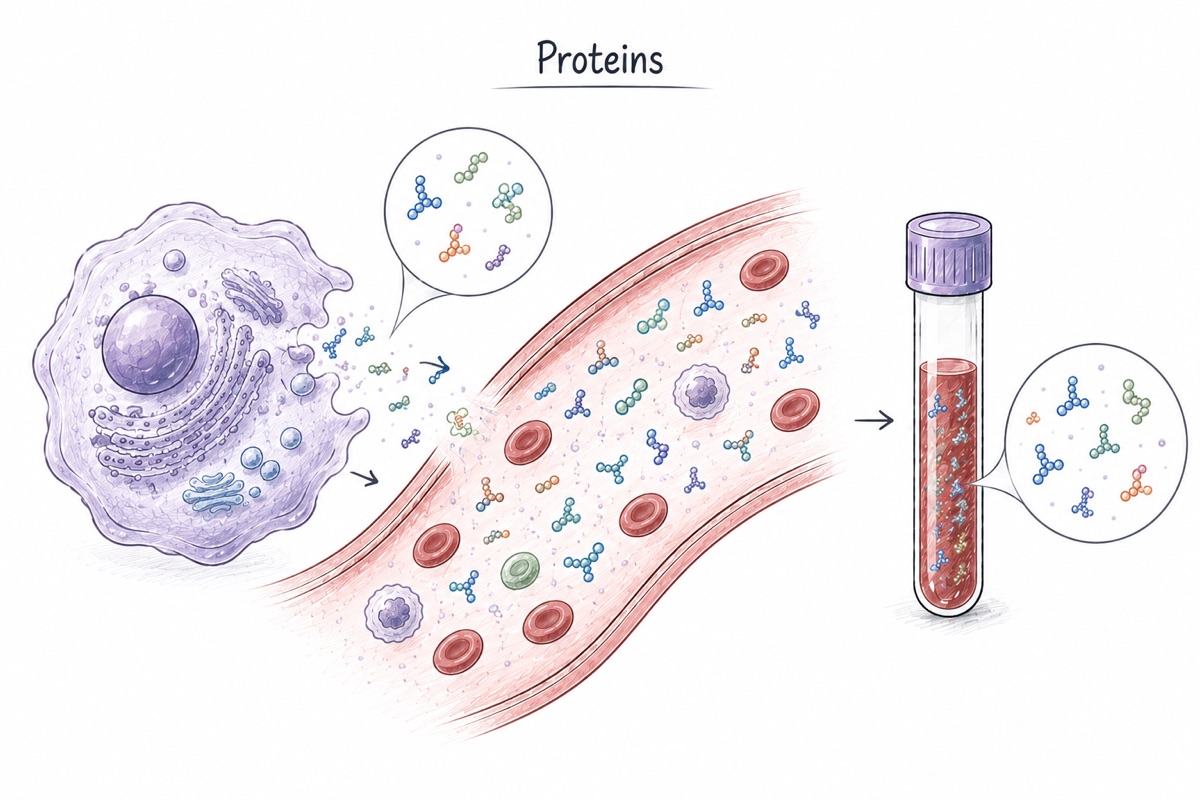
Proteins are the molecules the body's instructions ultimately build. They form structures, carry signals, and do much of the body's chemical work. Many proteins also circulate in blood in large amounts.
Protein testing is the oldest established approach covered here. Blood tests that measure a single protein have been used in routine medicine for decades, including tests used in prostate, ovarian, liver, and bowel cancer. When people call liquid biopsy a new field, they are usually talking about the DNA-based methods. Protein tests were already common long before those methods arrived.
There is a practical reason for that history. Protein measurements are often cheap and fast, and most hospital laboratories can run them without specialized genetic equipment. When a protein marker works well, it can be much easier to use widely than a more complicated genetic test.
The problem is specificity. A protein that rises because of a tumor may also rise with infection, inflammation, pregnancy, aging, or another change in the same organ. An abnormal result usually means something needs a closer look, not that a particular disease has been proven. That matters especially in people with no symptoms, where false alarms can lead to unnecessary follow-up testing.
Researchers increasingly measure many proteins together instead of relying on one. The pattern across a group of proteins may be more specific to a disease than any single protein on its own.
In this index: proteins appear in 7,431 of the classified papers and patents.
This page explains what these tests are and how researchers use them. It is not medical advice, and it is not a guide to whether any test is right for you or for a patient. Talk to a clinician about testing decisions.