
Analytes: 2 of 6
Circulating Tumor Cells (CTCs)
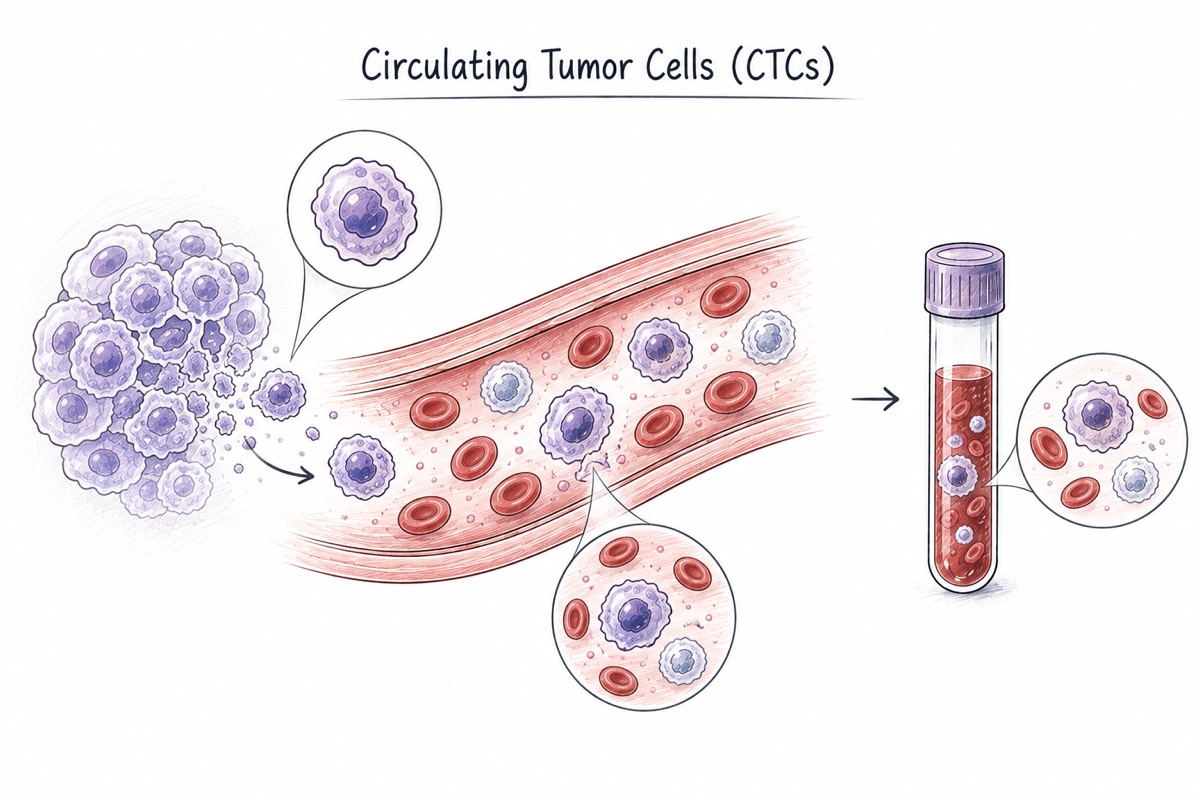
Many liquid biopsy tests look for material released from cells, such as loose DNA or fragments of other molecules. Circulating tumor cells are different because the thing being measured is an entire cancer cell. These cells have broken away from a tumor and entered the bloodstream.
They are extremely rare. A tube of blood may contain only a handful of circulating tumor cells among several billion normal blood cells. That makes finding them difficult. Many methods look for particular proteins on the surface of a tumor cell and then pull those cells out with magnets or trap them in a filter. The method can miss cells that no longer display the protein being used as bait. Some aggressive cancer cells change in exactly that way as they leave a tumor, so a low count does not always mean there were very few cells in the sample.
Still, getting hold of a whole cancer cell gives researchers information that a DNA fragment cannot. The cell can be viewed under a microscope and counted, and that count can say something about how advanced the cancer is and how a patient is likely to fare. Researchers can examine the cell's surface and internal structure. In some cases they can even keep the cell alive in the lab and test drugs against it directly.
Circulating tumor cells also sometimes travel in small clusters instead of alone. Those clusters appear to be more dangerous than single cells, so they are often counted separately. Because each captured cell can be studied on its own, one blood draw can also reveal differences between cancer cells from the same tumor.
There is simply much less material to work with than there is for loose DNA, and capturing the cells is harder. What you get in return is a complete cancer cell rather than a fragment of one.
In this index: circulating tumor cells appear in 11,140 of the classified papers and patents.
This page explains what these tests are and how researchers use them. It is not medical advice, and it is not a guide to whether any test is right for you or for a patient. Talk to a clinician about testing decisions.