
Learn
A liquid biopsy is a test that looks for signs of disease in a body fluid, usually blood, though spinal fluid, urine, and other fluids can also be used. The test looks for physical material that has made its way into that fluid, such as pieces of DNA, whole cells that have broken away from a tumor, or other molecules released by cells.
These tests can be used to look for disease or to follow a disease that is already known. Some are already part of routine medical care. During pregnancy, for example, a blood test can read fragments of DNA from the pregnancy that are circulating in the mother's blood. Other liquid biopsy tests are used to help choose a cancer treatment or keep an eye on a transplanted organ. You may know someone who has had one without ever hearing the term "liquid biopsy."
The main difference is the sample. To learn what is happening inside a piece of tissue, doctors often remove some of it with a needle or during surgery. That can give a very direct answer, but only for the place that was sampled at that moment. Scans have their own limits because something generally has to be large enough to see.
A liquid biopsy starts with a tube of fluid. Material in that tube may have come from different parts of the body, and another sample can usually be taken later without much difficulty. The catch is that the signal can be faint. The disease-related material may make up only a tiny fraction of everything in the sample, so these tests work much better in some settings than in others.
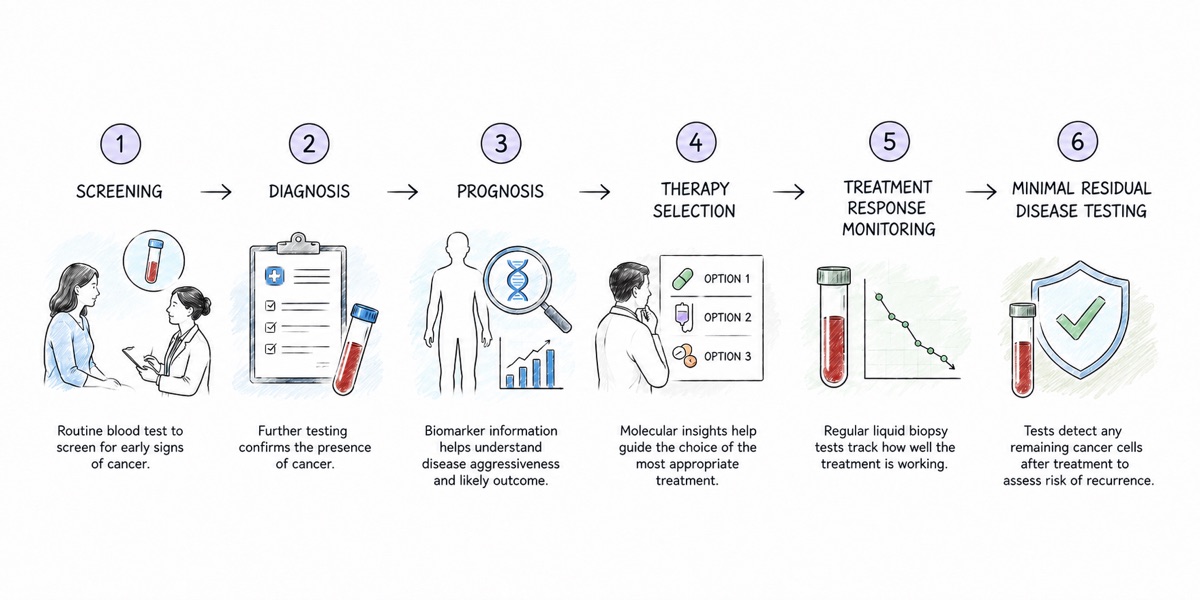
The pages below break the field into manageable pieces. The analyte pages cover the types of material a liquid biopsy can measure. The oncology clinical application pages follow the care pathway, from testing people who feel well to checking whether disease remains after treatment. The non-oncology application pages show how the same general idea is used outside cancer. Read them in order if that is useful, or jump straight to the topic you came for. Every number on these pages is counted from the papers and patents in this index.
Analytes
Oncology Clinical Applications
Non-Oncology Applications
This page explains what these tests are and how researchers use them. It is not medical advice, and it is not a guide to whether any test is right for you or for a patient. Talk to a clinician about testing decisions.