Analytes: 3 of 6
Cell-Free RNA (cfRNA)
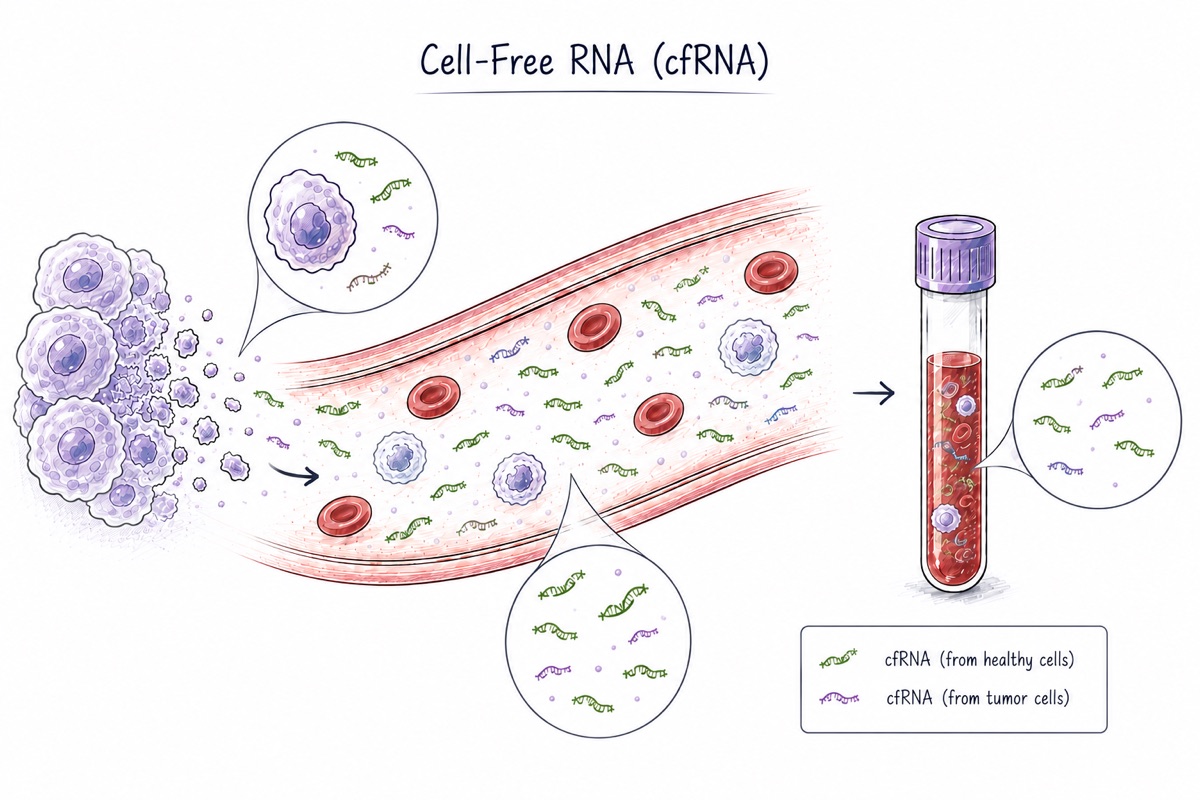
DNA holds the body's long-term set of instructions. RNA is one of the working copies a cell makes when it wants to use those instructions. That is what makes RNA interesting in a blood sample. DNA can show what a cell is capable of doing, while RNA gives a closer look at what the cell is doing at the time the sample is taken.
Like loose DNA, RNA can be found in blood plasma, the pale liquid left after blood cells are spun out of a sample. RNA is fragile on its own and breaks down quickly. Most of the RNA that survives in the bloodstream has some protection, either because it is sealed inside tiny packets released by cells or because it is tightly bound to proteins.
A lot of the work in this area focuses on very short pieces of RNA that help turn gene activity up or down. These pieces are unusually stable and relatively easy to measure. Their levels can also shift in recognizable ways when tissue is diseased, so researchers often look for combinations of RNA pieces that change together in a particular condition.
This gives RNA a somewhat different view of disease than DNA. A tumor may be acting very differently from healthy tissue even when it does not carry an obvious DNA change, and some of that activity can show up in its RNA. The same idea applies outside cancer, where tissue can be stressed or malfunctioning even though a person's underlying genes are normal.
Sample handling matters a lot. How long the blood sits before processing, the temperature it is stored at, and the method used to extract RNA can all change the result. That makes studies from different laboratories harder to compare and has slowed the path from interesting findings to reliable tests.
In this index: cell-free RNA appears in 13,137 of the classified papers and patents, second only to loose DNA.
This page explains what these tests are and how researchers use them. It is not medical advice, and it is not a guide to whether any test is right for you or for a patient. Talk to a clinician about testing decisions.